
Nearest Industrial Electrician: Southeastern Wisconsin Services
November 4, 2026
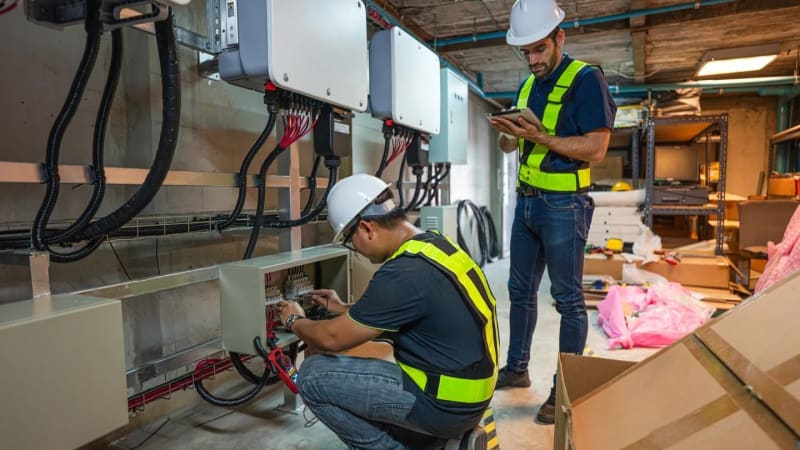
When plant managers search for the nearest industrial electrician in southeastern Wisconsin, they need responsive contractors who handle complex power systems without costly operational downtime. Industrial operations require specialized mastery of 480-volt three-phase distribution, motor control centers, machinery wiring, and stringent safety standards. Incan Electric provides licensed industrial electrical services across Milwaukee, Waukesha, Racine, Kenosha, Ozaukee, and Washington counties, maintaining reliable manufacturing infrastructure.
What Services Does the Nearest Industrial Electrician Provide?
Industrial facilities operate on high-voltage power networks vastly different from residential and light commercial buildings. Manufacturing plants, cold storage warehouses, processing facilities, and fabrication shops rely on robust electrical distribution to drive heavy equipment around the clock. A single electrical failure can stall assembly lines, damage expensive machinery, and cost thousands of dollars in lost productivity.
Finding the nearest industrial electrician ensures rapid response when critical systems trip or production lines require emergency equipment reconnection. Industrial electrical contractors provide comprehensive installation, maintenance, and power management capabilities:
- Heavy machinery and production line hookups - Running rigid metal conduit and high-capacity feeder cables to power CNC mills, injection molders, stamping presses, and packaging systems.
- Three-phase 480-volt power distribution - Installing and servicing heavy-duty switchgear, distribution subpanels, step-down transformers, and high-amperage bus ducts.
- Motor control centers and variable frequency drives - Wiring automated control enclosures, motor starters, VFD units, and programmable logic controller (PLC) power supplies.
- High-bay and perimeter facility illumination - Installing energy-efficient high-bay industrial LED fixtures, crane lighting, emergency egress systems, and exterior yard pole illumination.
- Preventative power quality and thermal diagnostics - Conducting infrared thermal scans, harmonic distortion testing, and voltage balance verification to avert catastrophic failures.
Call (262) 235-5444 or request an industrial consultation to have Incan Electric evaluate your facility's power distribution and production machinery wiring.
When Does Your Facility Need Industrial Electrical Attention?
In continuous manufacturing and logistics environments, electrical equipment experiences intense thermal stress and mechanical vibration. Recognizing early warning signs of electrical deterioration allows plant supervisors to schedule repairs proactively before equipment breakdown stops plant operations.
Facility managers across southeastern Wisconsin should remain alert for key operational symptoms indicating impending electrical breakdown:
- Frequent motor starter trips and thermal overloads - Overheating motors or nuisance breaker tripping often indicate phase imbalance, loose busbar joints, or harmonic distortion.
- Unexplained voltage fluctuations or equipment reboots - Automated machinery resetting during shifts indicates voltage sags caused by inadequate transformer capacity or heavy motor starting loads.
- Audible humming, buzzing, or chattering contactors - Loose magnetic coils, failing contacts, or excessive vibration in control cabinets signal imminent switch failure.
- Discolored enclosures and hot electrical terminals - Thermal anomalies on disconnect switches or breaker terminals point to severe resistance heating that creates fire hazards.
- Facility expansion and new machinery acquisition - Adding automated equipment requires formal load calculations to avoid exceeding existing utility service limits.
How Do Licensed Electricians Execute Industrial Power Projects?
Executing high-voltage industrial electrical work demands rigorous adherence to workplace safety regulations and precise engineering coordination. Industrial technicians coordinate shutdowns and work around production schedules to avoid interfering with facility shifts.
Certified industrial electricians adhere to a methodical execution process under national and state safety guidelines:
- Facility load calculation and engineering review - Technicians calculate connected load and confirm main switchgear capacity before connecting machinery.
- Lockout/tagout isolation and arc flash protocol - Electricians de-energize circuits, apply OSHA padlocks, and test for zero energy before opening cabinets.
- Rigid conduit fabrication and feeder installation - Crews bend rigid metal conduit and pull copper conductors rated for continuous industrial duty.
- Motor control wiring and terminal termination - Technicians wire control circuits, connect disconnect switches, and torque all lugs to specification.
- Phase rotation verification and load testing - Electricians test motor rotation, perform thermal imaging under load, and secure municipal sign-off.
Industrial vs. Commercial Electrical Systems: What Are the Key Differences?
While commercial electrical systems serve retail storefronts, office buildings, and restaurants, industrial electrical work involves drastically higher power levels, specialized environmental protection, and severe safety protocols. The following table contrasts industrial, commercial, and residential electrical characteristics:
| Feature | Industrial Electrical Systems | Commercial Electrical Systems | Residential Electrical Systems |
|---|---|---|---|
| Primary Voltage | 480V / 277V three-phase; up to medium voltage | 208V / 120V or 480V / 277V three-phase | 120V / 240V single-phase split |
| Conduit & Enclosures | Rigid metal conduit (RMC), NEMA 4X / 12 explosion-proof | EMT conduit, flexible metal conduit, surface raceways | NM-B Romex cable, minimal EMT conduit |
| Primary Loads | Heavy manufacturing motors, pumps, VFDs, ovens | Lighting, HVAC rooftop units, refrigeration, PCs | Lighting, domestic appliances, heat pumps |
| Safety Mandates | Strict OSHA LOTO, NFPA 70E arc flash boundaries | Standard OSHA compliance, basic PPE requirements | National Electrical Code residential rules |
| Operational Impact | Unscheduled downtime halts multi-shift production | Inconvenience or loss of retail customer traffic | Personal inconvenience or comfort loss |
| Inspection Standard | Rigorous industrial municipal inspection & engineering | Standard commercial building department review | Standard residential trade inspection |
What Factors Influence the Cost of Industrial Electrical Services?
Industrial electrical contracting encompasses projects ranging from isolated motor replacements to multi-megawatt plant switchgear upgrades. Because facility infrastructure, power requirements, and working conditions vary widely, electrical contractors do not quote fixed prices without an on-site engineering review.
Key variables that determine the overall project scope include:
- Service voltage and amperage demands - Projects requiring 480-volt three-phase infrastructure involve specialized switchgear, transformers, and arc-rated safety equipment.
- Conduit specification and environmental ratings - Facilities requiring rigid metal conduit, explosion-proof fittings, or washdown-rated stainless enclosures involve higher material and fabrication labor.
- Off-hours scheduling and production shutdown windows - Scheduling tie-ins during scheduled plant shutdowns, night shifts, or holiday weekends impacts labor scheduling.
- Motor control complexity and automation integration - Integrating variable frequency drives, safety interlocks, and programmable controls requires specialized diagnostic testing.
- Municipal permit fees and utility coordination - Industrial service modifications require specialized plan review, municipal permits, and coordination with electric utilities.
Because every plant's physical layout and manufacturing demands are unique, we quote after one visit so plant managers receive a precise, transparent scope of work.
Why Do Southeastern Wisconsin Facilities Rely on Incan Electric?
Southeastern Wisconsin remains one of the Midwest's most vibrant industrial and manufacturing corridors. From historic industrial complexes in Milwaukee County to modern manufacturing parks throughout Waukesha, Racine, and Kenosha counties, local businesses depend on dependable electrical infrastructure.
Incan Electric brings 5+ years of proven commercial and industrial field experience across southeastern Wisconsin. Our industrial portfolio includes complex 480-volt infrastructure projects such as industrial wiring in Salem Lakes, commercial light pole installations in Brookfield, exterior lumberyard LED pole lighting in West Milwaukee, commercial unit heating in Wauwatosa, dental facility wiring in Kenosha, and commercial office wiring in Pewaukee.
Our licensed electricians adhere to the Wisconsin DSPS electrical program enforcement of SPS 316, the NFPA 70 (National Electrical Code), and NFPA 70E electrical workplace safety standards. We coordinate directly with We Energies and municipal inspectors to ensure all work meets regulatory requirements.
Frequently Asked Questions
What voltage levels do industrial electricians handle?
Industrial electricians routinely work with 480-volt and 277-volt three-phase systems, as well as 208-volt and 120-volt auxiliary circuits. Depending on the facility, industrial electrical work can also involve medium-voltage distribution systems, step-down transformers, and high-capacity motor control centers. Working with these voltages requires extensive safety training, arc-rated personal protective equipment, and strict adherence to NFPA 70E standards.
What is the difference between a commercial and industrial electrician?
While commercial electricians primarily wire retail stores, offices, and restaurants using lightweight conduit and standard panels, industrial electricians work inside manufacturing plants, processing facilities, and warehouses. Industrial electricians specialize in three-phase high-voltage power, heavy machinery wiring, variable frequency drives, programmable logic controllers, and rigid explosion-proof conduit systems designed for harsh operating environments.
How do industrial electricians prevent production downtime during installations?
Industrial electricians prevent unscheduled downtime by conducting detailed pre-installation planning, fabricating conduit runs during normal operations, and scheduling electrical tie-ins during planned plant shutdowns or off-peak shifts. By coordinating closely with facility supervisors and staging materials in advance, electricians complete final terminations and testing quickly, allowing production lines to resume on schedule.
What safety standards govern industrial electrical repairs in Wisconsin?
Industrial electrical work in Wisconsin is governed by the Wisconsin Department of Safety and Professional Services (DSPS) under administrative code SPS 316, which incorporates the National Electrical Code (NEC). Additionally, industrial facilities must strictly adhere to federal OSHA regulations (29 CFR 1910) regarding lockout/tagout (LOTO) protocols and NFPA 70E standards for electrical workplace safety and arc flash protection.
Ready to Partner with the Nearest Industrial Electrician in Wisconsin?
Maintaining reliable power distribution is essential for keeping your manufacturing machinery running and your employees safe. Incan Electric delivers specialized industrial electrical services, commercial electrical contracting, and responsive emergency electrician support throughout Milwaukee, Waukesha, Racine, Kenosha, Ozaukee, and Washington counties.
Incan Electric serves homes and businesses across Milwaukee County, Waukesha County and the rest of our southeastern Wisconsin service area.
Call (262) 235-5444 or contact Incan Electric online to discuss your industrial facility's electrical requirements with our licensed professionals.