
Light Switch Replacement: Homeowner Guide for Southeastern Wisconsin
November 4, 2026
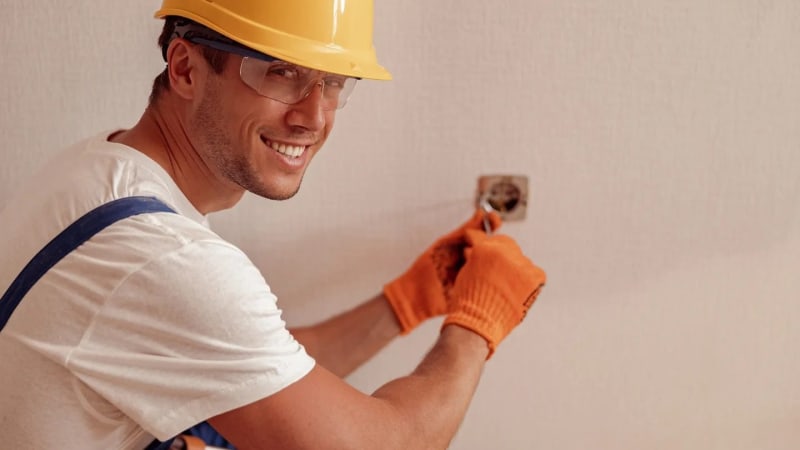
Light switch replacement involves disconnecting a worn, noisy, or malfunctioning wall switch and installing a safe, code-compliant device in its place. For homeowners across Milwaukee and southeastern Wisconsin, replacing a failed light switch restores reliable lighting, eliminates shock and fire hazards, and allows upgrades to modern dimmers or smart controls. Incan Electric replaces single-pole, three-way, and specialty switches to keep residential electrical systems running safely.
Why Is Your Light Switch Not Working?
When a light switch stops working, the root cause usually involves mechanical contact wear, loose wire terminations, or problems on the broader branch circuit. Wall switches endure thousands of cycles over their lifespan. Each time you flip a switch, internal contacts snap together or pull apart. Over time, friction and electrical arcing erode these contacts, leading to intermittent power or device failure.
A malfunctioning switch can also stem from wiring issues inside the wall box. Many mid-century homes feature switches wired using push-in rear terminals, commonly known as back-stab connections. Over years of thermal expansion and contraction, back-stabbed conductors often loosen. A loose wire generates heat, causes arcing, and cuts power to the fixture.
In other cases, external circuit conditions stop the switch from operating. A tripped circuit breaker in your service panel, a blown fuse, or a tripped upstream GFCI outlet shuts off power to the switch box. If you are experiencing loose switches, flickering fixtures, or tripping breakers, scheduling professional outlet and switch installation or repair ensures your wiring connections remain safe and secure.
When Do You Need Light Switch Replacement in Your Home?
Knowing when to replace a light switch helps you address hazardous electrical conditions before they escalate into house fires. While total mechanical failure makes replacement obvious, subtle performance issues often signal that internal components are degrading.
Recognizing early warning signs allows homeowners to schedule repairs before experiencing an emergency:
- Switch plate feels warm or hot to the touch - An overheated faceplate points to an overloaded circuit or loose terminal connection that generates dangerous heat inside the junction box.
- Audible buzzing, sizzling, or snapping noises - Crackling sounds when toggling a switch indicate continuous electrical arcing across worn contacts, creating a serious fire hazard.
- Persistent light flickering or delayed startup - If bulbs flicker despite being securely tightened, worn internal switch contacts are disrupting the steady flow of electrical current.
- Physical looseness, cracked toggles, or wobbly operation - A toggle that feels spongy, fails to snap firmly, or requires wiggling to turn on has suffered mechanical failure.
- Sparks emitting from the switch box or visible scorch marks - A bright flash or charred plastic around the faceplate indicates severe arcing requiring immediate power shutoff at the breaker.
- Breaker trips immediately when flipping the switch - A circuit breaker tripping upon toggle indicates a direct short circuit inside the switch or along the switch leg wiring.
Call (262) 235-5444 or request a callback to have Incan Electric inspect your home's switches and wiring.
How Do You Troubleshoot Common Light Switch Problems?
Troubleshooting a faulty switch requires determining whether the issue lies in the bulb, the fixture, the switch, or the circuit wiring. Before checking any component, safety comes first. Never remove a wall plate or touch electrical conductors on an energized circuit.
If a light fixture fails to turn on, start by testing the bulb in a working lamp to verify the filament or driver is intact. If the bulb works, check your main service panel to see if the circuit breaker has tripped. If resetting the breaker causes it to trip again immediately, leave it off to prevent electrical damage.
For persistent issues like buzzing, warmth, or flickering fixtures, diagnosing the root cause helps determine the right solution. The following table outlines common light switch symptoms, their underlying causes, urgency levels, and recommended remedies:
| Switch Symptom | Likely Cause | Urgency Level | Recommended Action |
|---|---|---|---|
| Warm or hot faceplate | Overloaded circuit or loose wire connection | Immediate | Turn off circuit breaker; call a licensed electrician. |
| Buzzing or popping sound | Internal arcing across worn mechanical contacts | Immediate | Stop using switch; turn off breaker and schedule replacement. |
| Light flickers when tapped | Loose terminal screw or failing internal contacts | Moderate | Check bulb tightness; schedule switch and box inspection. |
| Spongy or loose toggle | Mechanical wear of internal spring mechanism | Moderate | Replace switch with new single-pole or 3-way unit. |
| Breaker trips upon toggle | Dead short in switch mechanism or grounded hot wire | Immediate | Leave breaker off; have electrician locate short circuit. |
| Dimmer buzzes with LED bulbs | Incompatible dimmer and LED driver electronics | Low | Install an LED-rated dimmer matched to bulb specifications. |
How Does a Professional Replace a Light Switch?
Replacing an electrical switch involves working directly with energized branch circuits, identifying conductor roles, and ensuring secure terminations. While replacing a single-pole switch seems simple, hidden complications—such as multi-wire branch circuits, shared neutrals, or deteriorating wire insulation—require professional expertise and testing equipment.
A licensed electrician follows a methodical, safety-focused process to ensure every new switch functions reliably and conforms to current electrical codes:
- Turn off circuit power - The electrician switches off the panel breaker and verifies zero voltage with a calibrated tester.
- Remove faceplate and inspect wiring - The switch is unmounted to identify hot, neutral, traveler, and ground conductors.
- Inspect and prep conductors - Wires are checked for insulation damage, trimmed, and stripped cleanly to specifications.
- Wire and mount new switch - Conductors are torqued to terminal screws, folded into the box, and fastened flush.
- Restore power and test - Power is restored at the breaker to test switching action, voltage, and grounding.
Professional electricians use side-screw terminals rather than push-in rear terminals to provide superior contact area and withstand thermal expansion. In metal boxes common throughout older properties, electricians wrap switch terminal screws with insulating tape or use insulated barriers to prevent ground faults against the metal box enclosure.
Can You Upgrade to a Smart Switch or 3-Way Switch?
Upgrading your home's switches provides greater convenience, improves energy efficiency, and allows custom control over your lighting. When planning light switch replacement, homeowners often transition from standard toggles to modern controls suited for everyday living.
Common switch upgrade options include:
- Single-pole to modern rocker or dimmer switches - Smooth rocker decora switches modernize wall aesthetics, while modern digital dimmers allow smooth LED dimming without annoying buzzes or flickers.
- 3-way switch and 4-way switch installations - A 3-way switch setup controls a lighting fixture from two locations, such as hallway ends or staircases. Adding a 4-way switch enables control from three or more locations.
- Smart switch install for home automation - Installing smart switches enables remote mobile control, voice commands, automated schedules, and vacation lighting routines.
A successful smart switch install depends on the conductors inside your switch box. Most smart switches require a dedicated neutral wire to supply continuous low-voltage power for wireless radios while the fixture is off. Older residential switch boxes often contain only a switch loop without a neutral.
Upgrading your switches also enhances your residential indoor lighting, allowing you to create custom scenes and improve energy efficiency throughout your home. An electrician can evaluate your wall boxes, verify neutral availability, and recommend compatible smart dimmers or no-neutral smart switches for your setup.
Where Do We Provide Light Switch Replacement in Southeastern Wisconsin?
Incan Electric provides residential and commercial electrical services across southeastern Wisconsin, serving Milwaukee, Waukesha, Racine, Kenosha, Ozaukee, and Washington counties. We regularly perform switch replacements, lighting troubleshooting, and circuit repairs for homeowners in Milwaukee, West Allis, Wauwatosa, Kenosha, Racine, Waukesha, Brookfield, Mequon, and surrounding communities.
Our service region encompasses diverse architectural eras. In older urban neighborhoods throughout Milwaukee, West Allis, and Wauwatosa, homes built from the 1920s to the 1950s often feature plaster walls, shallow steel boxes, and switch loops lacking neutral wires. In historic communities like Mequon, properties may contain legacy knob-and-tube wiring that requires careful evaluation before installing modern switches.
Suburban homes and mid-century ranches in Racine, Kenosha, and Waukesha frequently operate on 15-amp or 20-amp branch circuits with original switches that have worn out. Additionally, severe Wisconsin weather—from summer Lake Michigan thunderstorms to winter freezes—causes power fluctuations across the We Energies grid that stress older household circuits.
Our real-world electrical projects across southeastern Wisconsin demonstrate our experience with local homes:
- Lighting, circuits, and electrical inspections - Circuit testing and lighting installations in Kenosha, Racine, Milwaukee, Wauwatosa, Bristol, Bayside, and West Allis.
- Whole-home and duplex rewiring - Knob-and-tube rewiring in Mequon, duplex electrical upgrades in West Allis, and residential service rebuilds across Milwaukee.
- Panel and service upgrades - Updating electrical panels and service capacities in Racine, West Allis, Milwaukee, South Milwaukee, Oak Creek, and Waukesha.
- Emergency service rebuilds - Restoring damaged service masts and utility connections in Eagle, Kenosha, Union Grove, Burlington, Brookfield, West Allis, Wauwatosa, and Menomonee Falls.
All electrical work completed by Incan Electric adheres to Wisconsin electrical code SPS 316, administered by the Wisconsin DSPS electrical program and based on NFPA 70 (National Electrical Code). When branch circuit additions require municipal permitting, Incan Electric pulls the permit and meets local inspectors to verify compliance. Because box depth, wiring condition, and switch types vary by property, we quote after one visit so homeowners know the exact project scope before work begins.
Frequently Asked Questions
Can I replace a light switch myself or should I hire an electrician?
While swapping a basic light switch seems simple, working with household electrical wiring involves real shock and fire hazards. Older homes often contain brittle insulation, ungrounded metal boxes, or multi-wire branch circuits sharing a neutral conductor. A licensed electrician confirms zero voltage, secures wire terminations to proper torque, and ensures compliance with Wisconsin SPS 316. Hiring a professional guarantees safe operation and prevents dangerous wiring mistakes.
What is the difference between a single-pole switch and a 3-way switch?
A single-pole switch controls a light fixture from one wall location and features two brass terminal screws plus a ground screw. A 3-way switch controls a fixture from two separate locations, such as the top and bottom of a staircase. It has three terminal screws: one common screw and two traveler screws. Installing a 3-way switch requires properly identifying traveler wires, which differ from standard single-pole wiring configurations.
Why does my light switch feel warm when the light is on?
Standard toggle switches should never feel warm to the touch. Warmth indicates high electrical resistance, caused by loose wire terminals, degraded contacts, or circuit overloading. However, solid-state dimmer switches naturally dissipate small amounts of heat through their faceplates during normal operation. If a standard switch feels warm or a dimmer feels hot, turn off the circuit at your breaker panel and have an electrician inspect it immediately.
Do smart switches require a neutral wire in the switch box?
Most Wi-Fi and smart switches require a dedicated neutral wire inside the switch box to maintain continuous power for wireless communication while the light is off. Many older homes in southeastern Wisconsin lack neutral conductors in wall switch boxes because older codes only required switching the hot conductor. Electricians can test your box, run new wiring, or install specialized smart switches designed to operate without a neutral conductor.
Ready to Schedule Light Switch Replacement in Southeastern Wisconsin?
Failing, buzzing, or hot light switches present serious safety hazards that should never be ignored. Whether you need a single switch replaced in an older bungalow or want to upgrade an entire home to modern dimmers and smart controls, Incan Electric delivers prompt, code-compliant service across southeastern Wisconsin. Our licensed electricians have 5+ years of experience troubleshooting circuits, updating wiring, and keeping your property safe.
Incan Electric serves homes and businesses across Milwaukee County, Waukesha County and the rest of our southeastern Wisconsin service area.
Call (262) 235-5444 or contact Incan Electric online to schedule your light switch service today.