
Whole-House Surge Protection Milwaukee: Complete Homeowner Guide
November 4, 2026
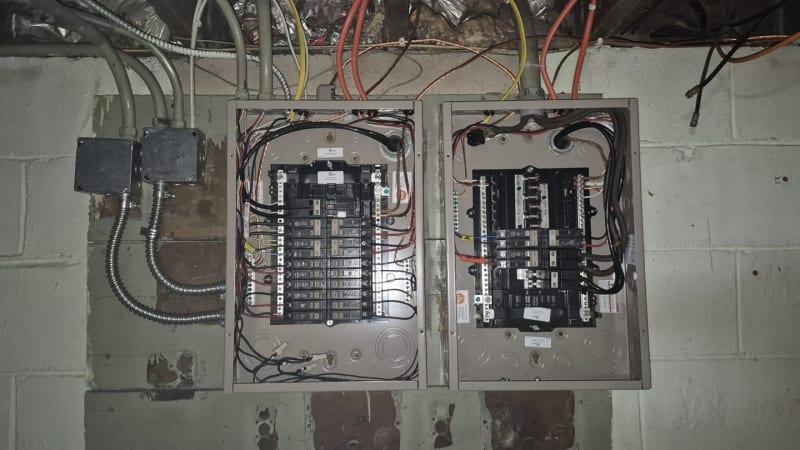
Whole-house surge protection is a dedicated surge-protective device installed at your main electrical service panel to block dangerous voltage spikes before they reach indoor branch circuits. For homeowners in Milwaukee and across southeastern Wisconsin, installing whole-house surge protection safeguards high-ticket appliances, delicate circuit boards, furnace blowers, and sensitive smart electronics from utility switching and severe weather. This guide explains how whole-house surge protection works, what local codes require, and how to protect your property.
Do Milwaukee Homes Need Whole-House Surge Protection?
Across Milwaukee neighborhoods—from historic bungalows in Bay View and Washington Heights to two-family duplexes in Riverwest and mid-century ranches in Greenfield—many homes still run on electrical systems designed for a simpler era. Many of these properties operate on older 100-amp electrical panels installed decades before homes were filled with microprocessors, automated climate controls, and high-draw electric vehicle equipment. When a voltage surge hits an unshielded panel, excess voltage races across every branch circuit simultaneously.
Standard power strips provide localized defense for a single desk or television, but they leave hardwired mechanical equipment completely vulnerable. Whole-home surge protection mounts directly inside or next to the service panel. By intercepting incoming spikes at the service entrance, panel surge suppression creates an umbrella of defense across all household circuits, preventing subtle voltage wear and catastrophic circuit board destruction.
Every home contains expensive equipment that relies on delicate solid-state electronics. Whole-house protection shields critical household investments against sudden electrical failure:
- Modern variable-speed HVAC systems - High-efficiency furnaces and air conditioner boards contain delicate microprocessors that degrade from repetitive low-level voltage spikes.
- Smart kitchen and laundry appliances - Refrigerators, induction ranges, dishwashers, and washers rely on digital inverter controls rather than mechanical switches.
- Dedicated EV charging equipment - Level 2 chargers connect to 240-volt circuits, exposing electric vehicle battery management systems to utility transients.
- Hardwired home networking and security - Wi-Fi mesh systems, smart thermostats, security cameras, and video doorbells remain connected continuously and can fail without warning.
- Unexplained breaker trips or flickering electronics - Nuisance breaker tripping and digital displays resetting often signal persistent voltage fluctuations across branch circuits.
Call (262) 235-5444 or request a callback to have Incan Electric inspect your service panel and install certified surge suppression.
What Causes Power Surges in Southeastern Wisconsin?
Voltage surges are brief spikes in electrical pressure exceeding normal household thresholds. In southeastern Wisconsin, electrical disturbances originate both outside the property and inside your home.
External surges frequently stem from severe Midwest weather. Summer thunderstorms off Lake Michigan produce intense lightning strikes. Even indirect strikes hundreds of yards away induce sharp transients on overhead utility lines that enter neighborhood electrical systems. High autumn winds and winter ice storms also drop tree branches across power lines, interrupting service. When severe storms cause physical damage, professional storm damage electrical repair fixes external hazards, but unseen voltage transients may have already entered indoor circuits.
Utility grid switching by We Energies represents another common external source. When the regional utility balances substation loads, switches capacitor banks, or restores power after storm outages, switching events generate brief voltage spikes across residential feeder lines.
Many surges also start inside the home. Heavy motorized equipment—such as central air conditioner compressors, furnace blowers, sump pumps, and refrigerators—creates inductive kickback every time it cycles on or off. Over time, repetitive micro-surges degrade internal diodes and capacitors, leading to premature appliance breakdowns.
Whole-House Surge Protector vs. Power Strips: What's the Difference?
Many homeowners assume plugging computers and televisions into power strips provides complete protection. While point-of-use surge strips help protect individual devices, they cannot defend an entire home. Power strips absorb far less surge energy than a panel device and offer no protection for hardwired appliances. Installing a whole house surge protector addresses voltage spikes at the electrical panel before excess energy reaches interior wiring.
A panel-mounted surge-protective device is built to divert much larger surges, such as those from nearby lightning and utility switching, before they spread through the house. The most effective electrical defense strategy is tiered: a whole-house surge protector intercepts large external transients, while point-of-use strips absorb residual clamping energy at individual outlets.
The following table compares whole-house surge-protective devices, point-of-use power strips, and unprotected electrical systems across key performance criteria:
| Feature | Whole-House Surge Protector (Type 1 / Type 2) | Point-of-Use Power Strip | No Surge Protection |
|---|---|---|---|
| Coverage Area | Whole home: all circuits, hardwired appliances, and outlets | Only devices directly plugged into the strip | None: all appliances and circuits are exposed |
| Installation Point | Main electrical panel or meter socket | Standard 120-volt wall outlet | N/A |
| Surge Capacity | High: rated for surges entering at the service | Low: sized for a few plugged-in devices | None (breakers do not clamp voltage spikes) |
| Protects Hardwired Equipment? | Yes: furnace, AC condenser, water heater, EV charger | No: cannot connect to hardwired equipment | No |
| Lifespan Indicator | External diagnostic LEDs and optional alarms | Small indicator light (often unmonitored) | None |
| When to Replace | When the status light shows protection is used up | When the protection light goes out | N/A |
| Primary Limitation | Requires professional electrician installation | Does not protect major appliances or motors | High risk of electronic and appliance failure |
How Is a Whole-House Surge Protector Installed?
Installing a surge protection panel unit requires working inside energized service equipment where utility feeder lines enter the home. Because this work involves high electrical energy and strict grounding rules, installation must be performed by a licensed electrician. Attempting a DIY installation creates severe shock hazards, arc flash risks, and can void equipment warranties.
At Incan Electric, we perform every installation to industry standards and local building codes. We provide professional transient voltage surge suppressor installation using certified Type 1 or Type 2 surge-protective devices. Our systematic installation process includes:
- Comprehensive electrical panel assessment - A licensed electrician inspects your main breaker panel, checks available breaker spaces, evaluates service grounding electrodes, and verifies panel health.
- Municipal electrical permit application - Incan Electric files and pulls the required permit with your local city or village building inspection department before beginning work.
- Utility coordination when required - If your service requires a meter disconnect or service mast disconnection, we coordinate directly with We Energies to manage the utility power interruption and reconnection safely.
- Panel installation and breaker integration - The electrician hardwires a Type 1 or Type 2 surge-protective device with short, straight leads directly adjacent to the main breaker to minimize let-through voltage and optimize response time.
- Grounding verification and final inspection - We test the grounding electrode system, verify LED diagnostic status indicators, test all connections, and meet the municipal inspector for final sign-off.
Keeping conductor leads as short and straight as possible during installation is vital. Excess lead wire adds electrical impedance, increasing the let-through voltage that reaches household appliances during a spike.
Is Surge Protection Required by Electrical Code in Wisconsin?
Electrical codes now reflect modern residential reliance on microelectronics. The National Electrical Code established clear mandates under Article 230.67. Since the 2020 NEC, services supplying dwelling units must have a Type 1 or Type 2 surge-protective device (SPD), integral to or next to the service equipment; also required when service equipment is replaced. Adding NEC 230.67 surge protection keeps a new or replaced service in line with the national code.
In Wisconsin, electrical installations fall under state regulatory oversight. The Wisconsin DSPS electrical program enforces an electrical code (SPS 316) based on the 2023 NEC with Wisconsin amendments, from September 1, 2026. In practice, a permitted service replacement or upgrade generally includes a compliant surge-protective device.
Because local interpretations can vary between municipalities—including Milwaukee, Wauwatosa, West Allis, and Kenosha—the local inspector confirms what applies to your specific installation. Reference standards are published directly in NFPA 70 (National Electrical Code).
Many older homes across Milwaukee operate on original 60-amp or 100-amp panels or outdated split-bus boxes. When scheduling an electrical panel upgrade to transition to modern 200-amp service, our electricians incorporate compliant Type 1 or Type 2 surge suppression into the new panel build, fulfilling SPS 316 requirements and protecting your electrical system.
What Factors Influence the Cost of Surge Protection?
The cost of adding whole-house surge protection depends on specific technical characteristics of your electrical service. Because every home's wiring, panel layout, and grounding differ, contractors do not provide accurate quotes without evaluating equipment in person. Key factors that determine project scope include:
- Electrical panel type and breaker space - Many Type 2 surge protectors connect through a breaker in the panel, so open spaces matter. If a panel is full, an electrician may rearrange circuits or mount the device in its own enclosure.
- Type 1 vs. Type 2 SPD selection - A Type 1 device can be installed on the line side of the main disconnect, for example at the meter, while a Type 2 device is installed on the load side, usually at the breaker panel.
- Condition of existing grounding electrodes - Surge protectors divert energy into the earth. If existing ground rods are corroded, water pipe bonding is disconnected, or grounding conductors are undersized, grounding must be upgraded.
- Whether an electrical panel upgrade is due - If your existing panel shows heat damage, obsolete busbars, or insufficient capacity, combining surge suppression with a panel upgrade provides the most sensible long-term value.
Because each home's service layout is unique, we quote after one visit so you know the exact scope before any work begins.
Frequently Asked Questions
Does a whole-house surge protector stop direct lightning strikes?
No surge-protective device can completely stop the catastrophic energy of a direct lightning strike hitting your roof or utility line. A direct strike carries enough energy to jump across air gaps and damage wiring no matter what is installed. However, a whole-house surge protector effectively arrests high-voltage spikes from nearby lightning strikes that travel through utility distribution lines. For complete protection during severe Wisconsin thunderstorms, electricians recommend combining whole-house panel suppression with point-of-use surge strips for sensitive electronics.
How do you know when a whole-house surge protector needs replacement?
Modern whole-house surge protectors feature diagnostic LED status lights or audible alarms that indicate the health of their internal metal oxide varistors. Green lights confirm active protection, while a red light or dark indicator means the unit has sacrificed its protective components to absorb a massive surge. When the indicator turns off, the device still permits electricity to flow but no longer shields your panel, signaling it is time to call an electrician for replacement.
Can you add surge protection to an older 100-amp Milwaukee electrical panel?
Yes, licensed electricians can install surge protection on many older 100-amp panels, provided the panel has room for the device and the busbars remain in safe condition. If your panel lacks space, an electrician can install an external Type 1 surge protector or reconfigure circuits using approved tandem breakers. If the panel is severely corroded, obsolete, or dangerous, replacing the panel first is the safest and most reliable approach.
How long does a whole-house surge protector typically last?
A whole-house surge protector lasts for years, but its life depends on how many and how strong the surges in your neighborhood are. Each time a transient voltage spike hits your service entrance, the internal varistors divert excess voltage and gradually degrade. In areas with frequent summer thunderstorms or heavy utility switching, units absorb wear faster. Annual electrical checkups ensure your unit's diagnostic status indicators confirm ongoing defense.
Ready to Protect Your Milwaukee Home from Electrical Surges?
Safeguarding your home's electrical infrastructure against damaging voltage transients protects major appliances, heating systems, and digital equipment from sudden failure. Our team of licensed Milwaukee electricians has 5+ years of experience providing thorough system evaluations, code-compliant installations, and complete municipal permitting throughout Milwaukee, Waukesha, Racine, Kenosha, Ozaukee, and Washington counties.
Call (262) 235-5444 or schedule a surge protection consultation to protect your home today.