
Home Addition Electrical Wiring Milwaukee: How to Power Your New Space Safely
November 4, 2026
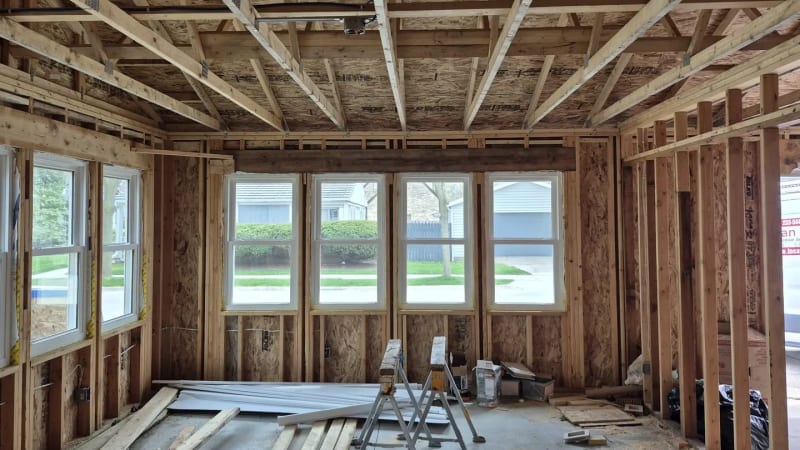
Home addition electrical wiring in Milwaukee requires calculating panel capacity, pulling city permits, roughing in dedicated circuits, and passing municipal inspections to power expanded living spaces safely. For homeowners expanding older bungalows, duplexes, or suburban ranches across southeastern Wisconsin, professional installation ensures modern heating, cooling, and appliance loads do not overload existing service equipment. Incan Electric plans and installs code-compliant wiring that protects your home and keeps construction on schedule.
Why Does Home Addition Electrical Wiring in Milwaukee Require Careful Planning?
Across Milwaukee County and southeastern Wisconsin, homes range from historic bungalows and duplexes to mid-century ranches. Many of these older homes operate on 60-amp or 100-amp electrical panels designed before central air conditioning, induction cooktops, and home automation. Expanding living space introduces modern high-draw loads that quickly overload older wiring.
Simply extending an existing bedroom circuit or tapping into the nearest junction box creates serious fire hazards and voltage drops. Modern rooms require dedicated infrastructure calculated for continuous demand. Hiring an experienced renovation electrician ensures your addition integrates safely with your existing system while meeting current Wisconsin standards.
Common residential expansion projects requiring professional electrical design include:
- Full room additions and sunrooms - Expanding exterior framing requires new general lighting circuits, tamper-resistant receptacles, and dedicated lines for heating or mini-split units.
- Basement finishing wiring - Converting lower-level space into livable rooms demands moisture-resistant wiring methods, comprehensive GFCI protection, and dedicated entertainment circuits.
- Accessory dwelling units (ADUs) - Building an attached or detached suite creates an independent household with cooking, water heating, and laundry demands requiring a dedicated subpanel.
- Major kitchen and bathroom expansions - Enlarging food prep and bathing areas introduces high-wattage appliances, requiring multiple 20-amp small appliance circuits and GFCI receptacles.
- Outdoor living additions and expanded garages - Enclosing patios or extending garages requires weather-rated exterior boxes, in-use covers, and heavy wiring for tools or vehicle chargers.
Plan your project early with our new construction and home remodeling electrical services to ensure every circuit meets modern energy standards.
How Do You Know if Your Existing Panel Can Handle an Addition?
Before drilling framing members or pulling branch wire, an electrician must determine whether your main service panel has adequate capacity. Your panel distributes utility power throughout the home. If your panel is physically full or limited to 100 amps, adding circuits for a new master suite or finished basement causes persistent breaker tripping.
Electricians evaluate panel capacity by conducting a formal load calculation under the NFPA 70 (National Electrical Code). This calculation accounts for square footage baseloads, dedicated kitchen and laundry circuits, electric heat, and cooling equipment. If your planned addition pushes total demand past safe thresholds, your main service equipment must be upgraded before adding new branch lines.
In older Milwaukee neighborhoods, homes often retain obsolete fuse boxes or crowded split-bus panels that cannot accommodate modern tandem breakers. In these situations, scheduling an electrical panel upgrade to 200-amp service provides the amperage and physical breaker spaces necessary to support your new addition safely.
Call (262) 235-5444 or request a callback to evaluate your service panel and plan your expansion with a licensed electrician.
What Is the Step-by-Step Electrical Process for a Room Addition?
Wiring a home addition follows a structured, multi-phase timeline coordinated directly with general contractors and municipal inspectors. Following a systematic process ensures that all structural wiring is properly placed and inspected before walls are closed with insulation and drywall.
The standard electrical workflow for an addition includes six essential steps:
- Load calculation and service audit - An electrician calculates connected loads under SPS 316 to confirm if your panel supports the expansion.
- Remodel electrical permit filing - Incan Electric files plans and pulls the required municipal permit before construction begins.
- Rough-in wiring installation - Electricians mount boxes, drill framing, and pull dedicated cables through open studs.
- Rough-in municipal inspection - A city inspector checks wire routing, box securing, and grounding before walls close.
- Trim-out and device mounting - After drywall finishes, technicians install switches, outlets, and fixtures, connecting all circuits.
- Final testing and sign-off - The system undergoes polarity testing before the inspector issues final occupancy approval.
When to Shut Off Power and Call an Electrician: If you notice sparks, warm switch plates, a distinct burning odor, or a breaker that trips immediately upon resetting, shut off power at the main breaker panel immediately. Do not attempt to force a tripped breaker into the reset position while faulty wiring remains energized. Call a professional electrician immediately to locate and repair the fault before restoring power.
How Do Electrical Needs Compare Across Common Addition Types?
Different types of residential expansions impose distinct demands on your home electrical system. While an enclosed sunroom may only require basic lighting and convenience outlets, a finished basement or guest suite requires specialized moisture protection, egress lighting, and independent climate circuits.
Planning new circuits for addition projects requires matching the intended room function with proper wire gauges and overcurrent protection devices. The comparison table below outlines typical electrical requirements across common expansion projects in southeastern Wisconsin:
| Addition Type | Common Power Demands | Dedicated Circuits | Panel & Service Impact | Key SPS 316 Code Requirements |
|---|---|---|---|---|
| Primary Suite Addition | Lighting, convenience outlets, mini-split unit | 2 to 4 branch circuits | Typically fits existing panel if spare slots remain | AFCI protection on all bedroom circuits; interconnected smoke alarms |
| Finished Basement | Recessed lighting, media centers, office, wet bar | 3 to 6 branch circuits | Frequently requires a subpanel for breaker space | GFCI in wet bar and unfinished areas; AFCI in living zones; moisture-rated cable |
| Kitchen Bump-Out | Cooking appliances, dishwasher, microwave, island outlets | 5 to 8 branch circuits | Often triggers a panel upgrade from 100A to 200A service | Two 20A small-appliance circuits; GFCI protection on countertop receptacles |
| Accessory Dwelling Unit (ADU) | Full kitchen appliances, heating, water heater, laundry | 8 to 15 branch circuits | Typically requires a 200A service upgrade and dedicated subpanel | Independent dwelling compliance; dedicated disconnect; AFCI and GFCI protection |
| Three-Season Sunroom | Exterior ceiling fans, heating lamps, patio outlets | 2 to 3 branch circuits | Modest demand; minimal impact if panel has open slots | Weather-resistant (WR) GFCI outlets; in-use protective bubble covers |
Careful planning during the design stage ensures your new layout accommodates your daily living habits without requiring costly modifications after construction is finished.
What Factors Determine the Scope and Cost of Addition Wiring?
Homeowners often ask what factors influence the overall investment required for addition electrical work. Because every home features a distinct architectural layout, service entrance age, and distance from the main electrical panel, costs are determined by project scope rather than flat estimates.
Key technical factors that establish the project scope include:
- Main electrical panel capacity - When an existing panel has sufficient spare amperage and open breaker slots, electrical work focuses on branch wiring. If the panel is overloaded, adding a subpanel or replacing the main service expands the project scope.
- Distance from the main panel - Routing home-run circuits across a finished house or through crawlspaces requires additional labor and materials compared to adjacent additions.
- Dedicated high-draw circuits - Rooms requiring 240-volt lines for electric heat, air conditioning, water heaters, or laundry demand heavier copper conductors and dedicated breakers.
- Subpanel requirements - Detached living suites or finished basements often benefit from a subpanel to centralize local circuit breakers and simplify wiring paths.
- Municipal permit fees - Local building departments set permit fees based on project scope, new circuits added, and required municipal inspection visits.
Because each home's framing and service entrance differ, we quote after one visit so you know the exact scope before work starts.
Where Do We Do This Work in Southeastern Wisconsin?
Incan Electric provides comprehensive electrical wiring, service expansions, and code upgrades for additions across six southeastern Wisconsin counties: Milwaukee, Waukesha, Racine, Kenosha, Ozaukee, and Washington. From dense urban neighborhoods in Milwaukee to growing communities in Wauwatosa and Brookfield, our work aligns directly with local municipal building standards.
Our field experience across these communities reflects the diverse electrical needs of local housing and commercial properties. Based on our real service records, common project types across our service territory include:
- Panel and service upgrades - Upgrading obsolete panels and expanding capacity in Milwaukee, Racine, West Allis, South Milwaukee, Oak Creek, and Waukesha (including mobile home subpanels).
- Comprehensive rewiring projects - Replacing vintage wiring, including knob-and-tube removal in Mequon, duplex rewiring in West Allis, and Milwaukee residential rewiring (including a triplex rebuild).
- Emergency mast and service rebuilds - Rebuilding storm-damaged overhead service entrances in Eagle, Kenosha, Union Grove, Burlington, Brookfield, West Allis, Wauwatosa, and Menomonee Falls.
- Circuits, lighting, and inspections - Installing branch circuits, lighting, pool bonding, and performing safety inspections in Kenosha, Racine, Milwaukee, Wauwatosa, Bristol, Bayside, and West Allis.
- EV charging infrastructure - Installing Level 2 electric vehicle charging circuits in Kenosha, Bristol, Milwaukee, West Allis, and Saukville.
- Standby generators and transfer interlocks - Installing backup power systems, such as a 22 kW standby generator in Belgium and transfer interlock switches in Kenosha, Union Grove, and Muskego.
- Commercial electrical installations - Supporting regional businesses with flood rehabilitation in Milwaukee, dental clinic wiring in Kenosha, office renovations in Pewaukee, exterior light poles in West Milwaukee and Brookfield, commercial heaters in Wauwatosa, and 480-volt distribution in Salem Lakes.
Our team coordinates all necessary power interruptions directly with We Energies and manages city permits to ensure your project progresses smoothly. Our licensed Milwaukee electricians ensure your addition complies with the Wisconsin DSPS electrical program standards enforced under SPS 316.
Frequently Asked Questions
Do I need a remodel electrical permit for an addition in Milwaukee?
Yes. The City of Milwaukee Department of Neighborhood Services (DNS) and municipal building departments across southeastern Wisconsin require a remodel electrical permit for any project that adds new circuits, alters panel capacity, or expands living space. Pulling a permit ensures that rough-in wiring and final connections are inspected by a certified municipal inspector, confirming compliance with SPS 316 and safeguarding your home's insurance coverage and resale value.
When does an addition require new circuits instead of extending existing ones?
An addition requires new circuits whenever you add high-draw appliances, dedicated heating or cooling systems, bathrooms, or full living spaces. Code prohibits tapping existing general lighting circuits for new kitchen countertops, laundry equipment, or HVAC systems. Even for standard bedroom additions, extending an existing 15-amp circuit that already powers multiple rooms leads to overloaded breakers. Installing dedicated home-run circuits ensures reliable power delivery without overloading older branch wiring.
Can an accessory dwelling unit run on my existing house electrical panel?
In most cases, an accessory dwelling unit cannot run on an existing main panel without an upgrade. ADUs include independent cooking, water heating, space heating, and lighting loads that quickly exceed available amperage on standard 100-amp or 150-amp residential services. Connecting an ADU typically requires upgrading the primary service to 200 amps and installing a separate 100-amp subpanel in the ADU to provide local circuit control and overcurrent protection.
Why should I hire a licensed renovation electrician instead of doing DIY wiring?
Wiring an addition involves complex load calculations, concealed junction boxes, arc-fault circuit breaker integration, and strict box-fill rules under SPS 316. Unlicensed electrical mistakes create hidden fire hazards, electrocution risks, and code violations that fail municipal inspections and void homeowner insurance policies. A licensed renovation electrician pulls legal permits, balances panel loads, installs wiring according to code, and coordinates municipal inspections to ensure your new living space is completely safe.
Ready to Plan Your Home Addition Electrical Wiring?
Expanding your home is a major investment that demands a dependable, code-compliant electrical system from day one. Incan Electric brings 5+ years of licensed expertise in panel upgrades, room additions, subpanel installations, and municipal permitting across Milwaukee, Waukesha, Racine, Kenosha, Ozaukee, and Washington counties. We handle every detail from initial load calculations to final inspection sign-off.
Call (262) 235-5444 or contact Incan Electric online to schedule a consultation for your home addition electrical wiring today.